Birds of Skjálfandi Bay
When visiting Skjálfandi Bay it's equally important to be on the lookout for birds as well as whales. Birds are a huge part of the wildlife in the bay and can often give clues as to where whales might be feeding. A common thing to see is a swarm of birds diving to the surface, picking up leftovers from whales.
Following are information about birds that is common to see during whale watching tours.
Fulmar

Fulmar is one of the most common bird species in Iceland. It breeds in sea cliffs all around Iceland and also inland in some places.
Arctic Tern

The migration flight of the Arctic Tern is among the longest of all bird species. It breeds in the high arctic but in the winter it goes as far south as Antarctica.
Puffin

Puffin is distributed all around Iceland and is the most numerous bird species. It nests in colonies where it digs burrows in grassy area but sometimes it nests in rocky slopes or in fractures in cliffs.
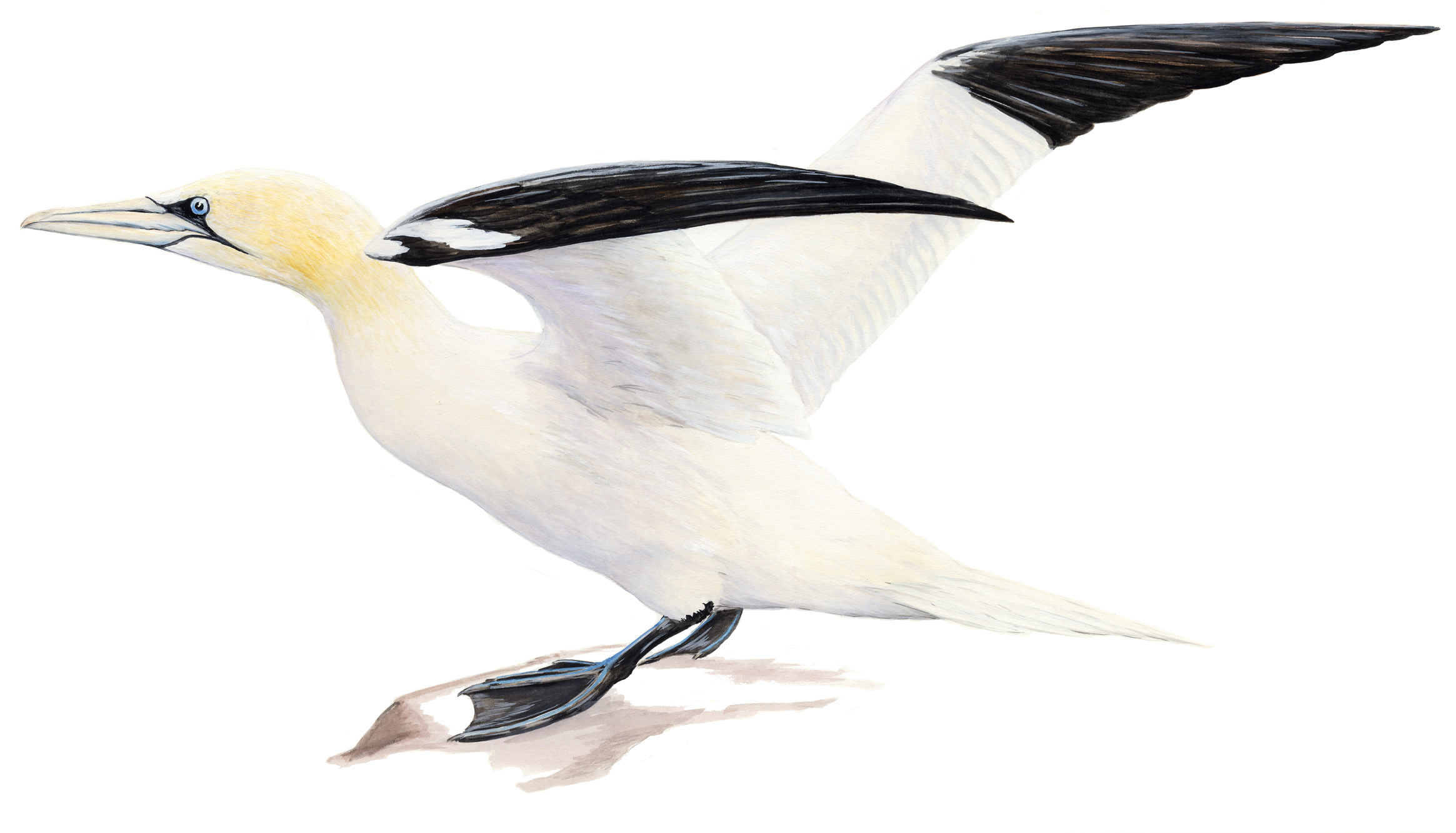
Gannet

The Gannet is the largest seabird around Iceland. It is often called the queen of the Atlantic Ocean because of its elegance. Gannets nest in colonies on rocky islands and cliffs in few places in Iceland.
Common Guillemot

Common Guillemots nest in sea cliffs all around Iceland. They lay their egg on the bare rock tight together on broad sills.
Brünnich's Guillemot

Brünnich’s Guillemot is a high arctic species. It is common in Iceland but the population has been declining.
Black Guillemot

Black Guillemot nests behind rocks on rocky coasts and are distributed all over Iceland where suitable habitat is found.
Great Cormorant

Great Cormorants breed in the western part of Iceland, Faxaflói and Breiðafjörður. Outside the breeding season birds disperse and can be found all around Iceland.
Eider duck

Eider is the only duck species in Iceland, which is dependent on the sea all year round. It sometimes nests by rivers and lakes inland but takes the young to sea right after hatching.
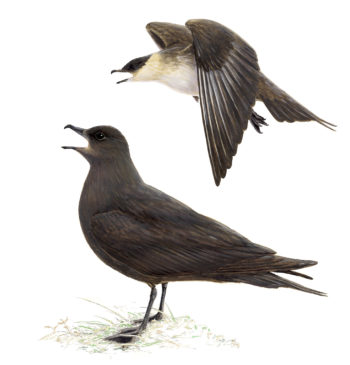
Arctic Skua

Arctic Skua is a common species in Iceland. It is a migrating bird that stays at southern oceans during winter and nests in the arctic.
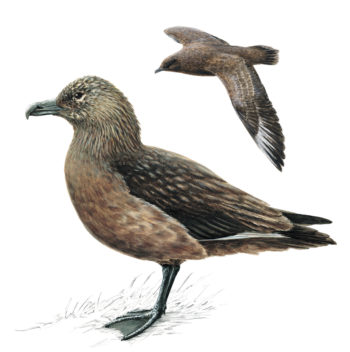
Great Skua

Great Skua is a large and strong built bird. It nests in colonies in flat coastal areas and the largest colonies in Iceland are by the sandy coast of South Iceland.
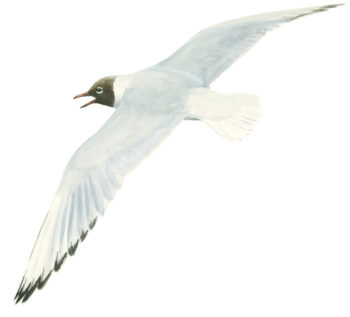
Black-headed Gull

Black-headed Gull started to nest in Iceland early in the last century. It is now distributed all over the lowlands of Iceland. Black-headed Gulls breed in colonies, mostly in wetlands.
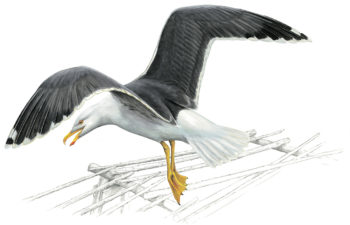
Lesser Black-backed Gull

Lesser Black-backed Gulls started to nest in Iceland early in the last century. Now they breed in most parts of Iceland but the largest colonies are in the southwest.
Herring Gull

Herring Gulls started to nest in Iceland around 1925. This is a common species in coastal areas all around Iceland except for the western part where Glaucous Gull is common.
Great Black-backed Gull

Great Black-backed Gull is the largest gull in Iceland. It can be found all over Iceland but breeds mainly by the coast.
Kittiwake

Kittiwakes nest in dense colonies in sea cliffs all around Iceland. The nest which is made of grass and mosses, glued together with droppings, is placed on small ledges in steep cliffs.
Razorbill

Razorbill is common all around Iceland. It nests in rocky slopes beneath sea cliffs and sometimes in gaps or fractures in the cliffs.
Red-necked Phalarope

Red-necked Phalaropes have lobed toes and are therefore good swimmers. They nest in fertile wetlands all around Iceland.